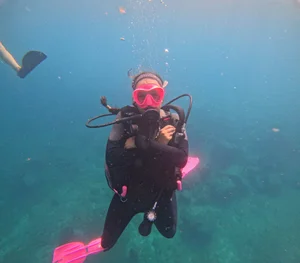
The Importance of Good Buoyancy
The first time I jumped in the water, the only things I was thinking about were the colorful fish all around me and the fact that I was breathing underwater. I never thought about where I landed or where my fins were. Meanwhile, a cloud of sand was settling onto a coral head that took decades to grow.
It’s easy to think of coral as rock. It isn’t. Corals are colonies of tiny animals called polyps, and they’re close relatives of jellyfish and sea anemones. Coral reefs are vital to the ocean, providing shelter and food for a huge variety of marine life. They’re also already in danger, so as divers it’s important that we do our best to protect them and dive responsibly. Poor buoyancy control is one of the most common ways recreational divers harm the places they love most. The good news is that it’s also one of the easiest problems to fix.
How can divers damage the reef?
1. Direct contact. Fins, knees, hands, and tanks bump, scrape, and break coral. Even a light touch can strip the protective mucus layer that coral relies on, leaving it open to infection and disease.
2. Sediment clouds. When a diver sinks too low or kicks near the bottom, sand and silt get stirred up and settle on nearby coral. Coral then has to spend energy clearing it off, and heavy sediment can block the sunlight its algae need to survive.
3. Dangling gear. An unclipped backup regulator or gauge hose can drag across the reef for an entire dive without the diver ever noticing, and sweep across the reefs.
How can you practice good buoyancy?
Practice: Good buoyancy develops over time and gets easier the more you dive. Pool sessions are a great place to work on it without a reef underneath you.
Control your breathing: Your lungs work like a balloon: the more air you take in, the more you float. Slow, steady breathing keeps you from bobbing up and down. Once you’re comfortable, you can even use your breath to fine-tune your position, inhaling to rise slightly and exhaling to sink.
Stay level: When I go diving, I often see people swimming at an angle with their heads up and their feet down. In that position, every fin kick pushes water down toward the reef, stirring up sand and risking contact with coral. Keeping your body parallel to the bottom gives you more control over where you’re going and helps you stay aware of the coral around you.
Get your weighting right: Sometimes it’s not the diver’s fault. Being overweighted or underweighted is a common problem. Divers who are too light struggle to stay down and tend to float toward the surface. Divers who are overweighted have to add extra air to their BCD to compensate, and that air expands as they rise and compresses as they sink, making them unstable. Ask your instructor or dive guide to help you do a proper weight check.
Secure your gear: Finally, make sure all your equipment is attached close to your body. A dangling onto or pressure gauge can drag across the reef without you noticing. Clips, retainers, and BCD pockets all help keep everything tucked in.
When you get this right, you don’t just protect the reef. You also use less air, feel calmer, see more marine life, and take better photos. Protecting coral and becoming a better diver turn out to be the same skill.